

The world’s food system is heading into the hardest eighteen months it has faced in a decade or more. Every impact of the coming hunger and prediction of where El Niño will do the most harm is already being reported by government scientists, in public, on a schedule that you can follow.
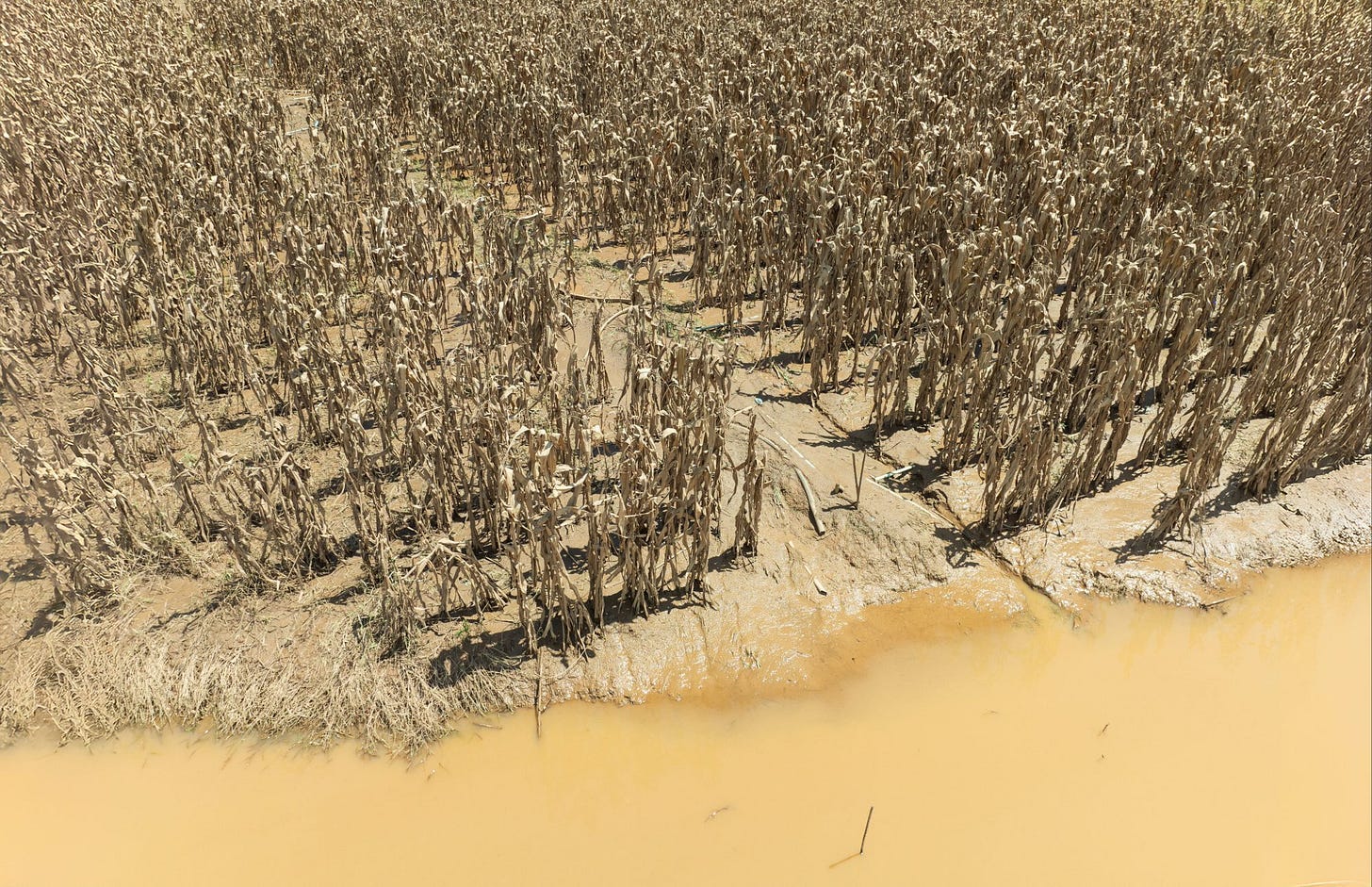
Figure 1: Photo credit: World Peace Foundation, toa555/stock.adobe.com
This is what the expert warnings say, when each El Niño impact comes due, and what can still be done to minimize the hunger and other impacts of the 2026-7 El Niño.
A Different Kind of Disaster
Most disasters arrive without permission. An earthquake gives no notice. A flash flood gives minutes of warning. A hurricane gives days.
The hunger now forming in the world’s food system is not like that. Its coming has been predictable for months, it will take another year for the 2026-7 El Niño to fully arrive, and the instruments watching it are free for all to read. It is a food crisis on a schedule where prevention is possible.
“The cruelest thing about the hunger from the 2026-7 El Niño now forecast is that IT IS FORECAST. Nobody in 2027 will be able to say the maps were unavailable or ‘How could I have known?’ The reports are free, public, and updated weekly. Humanitarian actions still can be taken to respond to the coming hunger, but will we act?”
That is the question this article asks. Everything else said in this article is evidence for why and how we should act, and the last section tells exactly what we still can do to anticipate and prevent the coming hunger.
The Warning System for Coming Hunger Already Exists
Start with what is being published right now, this week and every week, by people paid by taxpayers to publish it.
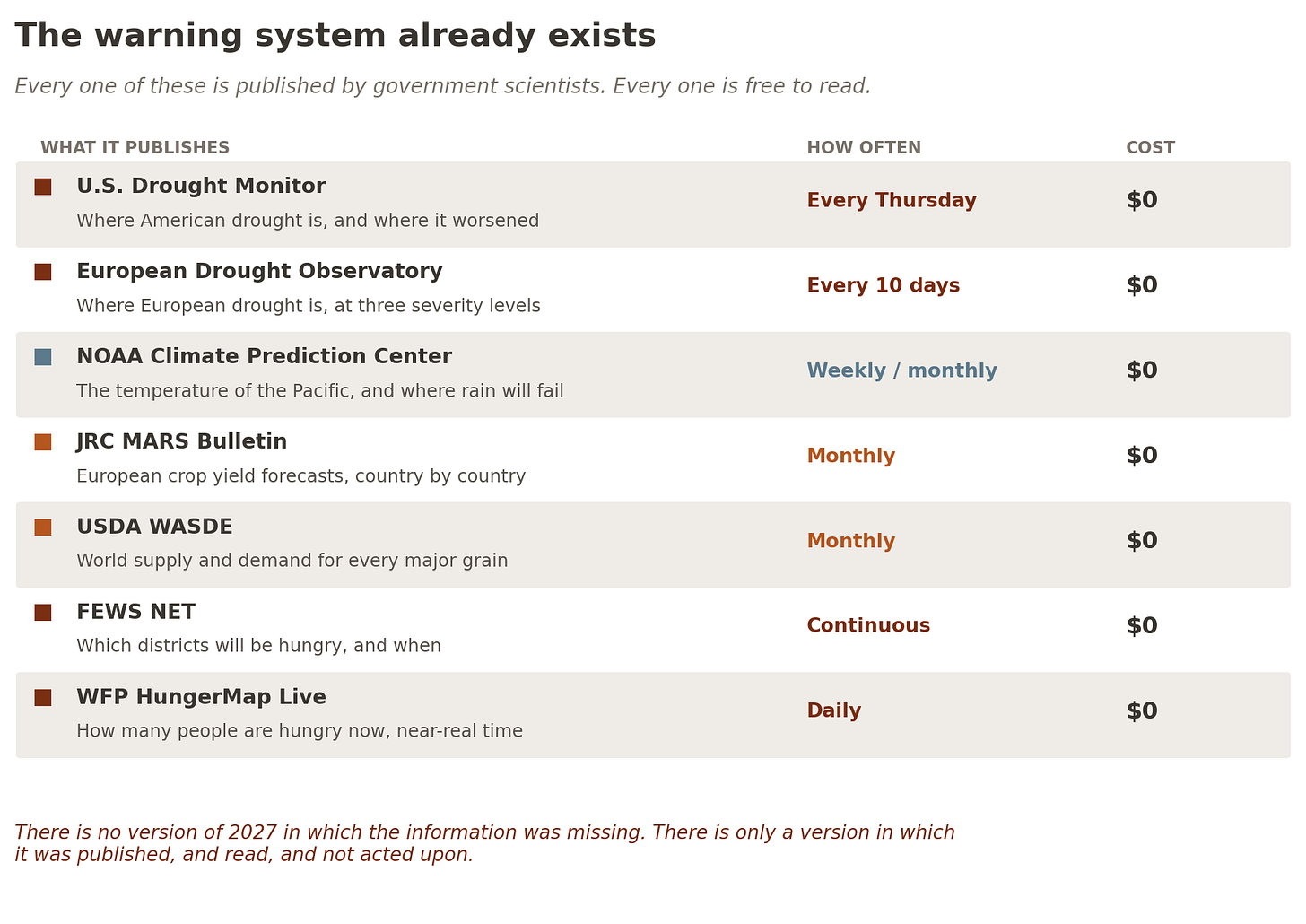
Figure 2. The core public monitoring systems for global food security. None of them requires a subscription, a login, or a security clearance.
The U.S. Drought Monitor releases a map every Thursday morning showing where American drought sits and, crucially, a change map showing where drought has worsened over the previous week. Europe’s Drought Observatory does the same every ten days. NOAA monitors the temperature of the tropical Pacific continuously and publishes a monthly forecast of how strong this El Niño is going to be. Crop analysts in Washington and Brussels publish yield forecasts for every major growing region, every month. FEWS NET publishes which districts of which countries will run short of food, and roughly when.
None of this is obscure. All of it is written in plain language. Any journalist, aid official, member of Congress or member of the European Parliament can read the whole system in an afternoon.
This means the honest way to describe the hunger that is coming is not as a surprise, and not as a tragedy. It is a food crisis on a schedule.
But here is a warning: this system is not permanent. In September 2025 the U.S. Department of Agriculture announced it would stop publishing its annual Household Food Security report, the thirty-year record of how many Americans cannot reliably afford to eat. ¹ Ending the count does not end the hunger. It ends the ability to see it. Everything this article demonstrates about the value of public data applies with equal force to why we need to keep the U.S. Household Food Security Report as a public resource.
Why Hunger Arrives Late
Before we discuss the schedule itself, one idea has to be clear, because without it the rest looks like alarmism.
The single most misunderstood thing about food crises is timing. People expect a drought to produce hunger the way a fire produces smoke; immediately, visibly, in the same place and time.
It does not work that way, for a simple reason: the harvest a drought destroys is usually not the one you, people of the Global South or the rest of the world are currently eating.
A dry summer damages a crop that gets harvested in autumn, sold or stored over the winter, fed to livestock or put on the market in the spring, or sold to people through the spring and summer and shows up as the price of grain, meat and milk or grain a year later. A farmer who cannot afford fertilizer this season plants a weaker crop next season. A field left unsown in September is a shortfall the following August. Every link in that chain adds months to when hunger will arrive.
The gap between the weather and the hunger is not evidence that the warnings were wrong. It is the normal delay of a food system, and it is exactly the space of time during which something could be or could have been done. It is why there is time, between now and when the worst of El Niño hits, in which humanitarian assistance can be mobilized.
That delay is the reason for hope in this story. It is also the reason for urgency. The two are both caused by the same facts and knowledge.
Three Pressures, One Year
Three separate things are pressing on the world’s food supply at once this year. They are usually reported as unrelated stories, which is why the picture often looks confusing. Taken in order, they are straightforward and combine to form a clear picture.
Each of these three is set out in full in the following sections, with the sources. I highly suggest that you read the details of all three because the droughts, El Niño and the Fertilizer crisis are going to cause incredible suffering and none of them are what you think. What follows first is a summary of what the three of them together are already doing and are going to do to people around the world:
The Calendar
With the three pressures in view, the sequence becomes readable. Here is the schedule, as the public data currently describes it, it is beginning to happen as predicted and we have hard evidence that El Niño’s impacts on rains and crops have already started to occur.
June to August 2026 - already happened. The rains that feed Sudan’s sorghum and sesame did not arrive, and the Nile River fell with the lack of rain. The lack of rain will impact both rainfed and irrigated crops in Sudan and the region. This is the one row in the predicted schedule of El Niño’s rearrangement of rainfall that can already be checked against the world. It happened as forecast.
September 2026 - now. Farmers across northern Europe have about four weeks to plant this autumn’s oilseed crop. The window is set by daylight and by pests, not by frost, and it does not move. Planting needs rain at sowing and rain again each week for the four weeks thereafter. If this rain does not come, a crop that was meant to be a record becomes a shortfall, and that shortfall belongs to 2027, not to this year. Almost nobody is watching this. It may be the most consequential four weeks in the whole sequence. ² Oilseed matters more than its acreage suggests, because one crop feeds two markets. Crushed rapeseed yields roughly 40 percent oil and 60 percent meal. The oil goes into cooking oil and biodiesel, the meal is what European dairy herds and pig and poultry farms are fed.
A shortfall raises the supermarket oil prices and the feed bill at the same time. Vegetable oils also trade as a single pool. Palm, soy, rapeseed and sunflower make up 88 percent of all the cooking oils that the world eats. Commercial buyer substitute freely, so a European failure to produce rapeseed does not stay in Europe. The increase on global demand will arrive just as El Niño impacts next year’s palm oil production. Analysts estimate Indonesian and Malaysian output of palm oil could fall by some 4.5 million tonnes based on the historic pattern of where past El Niños have caused damage. The market has already banked the expected record European crop, causing rapeseed oil prices to ease over the summer on expectations of larger supplies in 2026/27. That assumption is what these four weeks decide. If the harvest is smaller than expected, vegetable oils tighten worldwide, and that matters more than the acreage suggests. Vegetable oils supply about a tenth of the world’s daily calories, second only to cereals, and they are the cheapest dense calorie a poor household can buy, it is the item a wealthy shopper substitutes with something else and the one that a poor one simply goes without.
There is a lever here. Around 31 million tonnes of vegetable oil is burned in the EU as biodiesel each year, the calories from this oil are enough to feed more than 320 million people. A large share of Europe’s rapeseed oil goes to biofuel rather than food. If the crop comes in short, Europe faces a choice: relax the EU Biofuel Mandate and release those calories for food, or import and outbid poorer buyers from around the world to drive up food prices and make EU biofuels. This is the article’s argument in miniature. ² Whether a bad rapeseed harvest results in hunger depends on a decision by the EU.
October 2026 to February 2027 - the feed bills. Grain harvested this autumn becomes animal feed this winter. Feed is the largest single cost in producing meat, milk and eggs. This is the first stage that ordinary shoppers in wealthy countries actually notice, and they notice it at the meat counter rather than in the bread aisle.
December 2026 to February 2027 - the ocean peaks. The El Niño reaches its forecast maximum. Southern Africa plants its single annual maize crop in December, directly into the forecast peak of when El Niño is expected to cause droughts.
January to March 2027 - the lean season. Southern Africa’s hungry months. This is the first point in the whole sequence where hunger stops being a projection and becomes a measurement, hungry mouth by hungry mouth. By then, every decision that could have softened the hunger will already have been made or not made. We do not have much time.
Spring to autumn 2027 - the price wave in rich countries. European food inflation is expected to peak near 3 percent, roughly a percentage point of which is attributable to this year’s weather. ³ In the United States, the same global prices arrive on top of drought and input-cost inflation, and tariffs already in the system.
Summer 2027 - a new American drought. The snowpack that fails to accumulate in the Northwest this winter becomes the water that is not there next summer. This is a region that in a good year grows and exports a great deal of wheat but will have a reduced harvest due to the expected drought.
Late 2027 - Sudan’s shortfall arrives. The harvest now failing will be eaten first and missed later. FEWS NET expects conditions to ease around the November harvest, and the reduced food stocks due to the El Niño will be felt in the second half of 2027.
2028 - the slow damage. The phosphate skipped in 2026 starts to show up as a lower yields and smaller crops, in the countries least able to absorb a reduced harvest.
Where These Three Crop Drivers Actually Land
One distinction matters more than any number in this article.
In Europe and America, the crops lost due to drought are called inflation. In Nairobi, Khartoum and Port-au-Prince, the same crop loss is measured in missed meals and increasing hunger.
A European household spends roughly a tenth of its income on food. A three percent food-price rise there is an irritation, a slightly worse year, an argument about supermarket margins. In countries where food takes up to forty percent of household income, an identical price move is a family dropping from two meals a day to one.
That is why the hunger from this convergence of factors will not land where the droughts happened. Europe will eat. America will eat. Both will complain about grocery bills, and both complaints will be legitimate, particularly for the families in those countries who were already struggling. Nearly one in four American adults reported living in a food-insecure household in 2025, and more than one in four of working age. ⁴ Massachusetts, counted by household rather than by adult, is worse still: a record 40 percent, roughly 1.1 million households, reported food insecurity in 2025, more than double the 2019 rate. ⁵
But the acute hunger will land in Sudan, which imports roughly four fifths of its wheat and already has more than nineteen million people short of food. It will land in southern Africa, where a single failed maize season has no backup. It will land in Haiti, Somalia, Chad and South Sudan, which sit at the top of the humanitarian warning lists precisely because they have no food cushion left. ⁶
In Sudan it is no longer a forecast. The rains that should have come in June and July did not come, and the Nile River has fallen due to the missed rains. The reservoir behind Ethiopia’s Grand Renaissance Dam stood six meters lower this July than last, and parts of the Blue Nile basin have had as little as half their normal rainfall. In Gedaref, where most of the country’s sorghum and sesame is grown, fields that are ordinarily green by August were still brown this month, and farmers gathered behind their imams to pray for rain. The agriculture ministry is telling farmers to switch to drought-resistant varieties and to delay planting. Those who can still plant say it costs four times what it did last year, because the same closure of the Strait of Hormuz that raised fertilizer prices in Iowa raised them in Gedaref. On a farm his family has held for a century in Al-Jazira, which he recovered from the Rapid Support Forces only last year, a farmer told reporters that he is sixty-three and has never seen the Nile River this low in August. ⁶
The Nile River running low and the reservoir depleted were foreseeable too. Elfatih Eltahir at MIT has spent thirty years documenting the link between El Niño and the flow of the Nile, and his work shows that when an El Niño event begins in late spring, as this one did, the probability of drought across southeastern Sudan and northwestern Ethiopia is high. The warning for Sudan existed before the rains failed. Nor is Sudan alone in having crossed from projection into measurement.
In the week of August 20, 2026, the U.S. Climate Prediction Center upgraded southern South Sudan and parts of northern, eastern and central Ethiopia to drought after ninety days of severe rainfall deficits. Recorded dryness due to lack of rain is worsening across Central America and Venezuela. In the Dry Corridor of Guatemala, Honduras and El Salvador that dryness has already become hunger. Much of this region saw only five to eight days of rain between late June and late July. Honduras has lost close to nine thousand hectares of maize and three thousand hectares of beans. The FEWS NET now places the poorest households of Guatemala’s Dry Corridor in Crisis through September. Southern Africa is the exception that proves the schedule: its rains are not due until October, so it is still, for now, a projection. ⁶
The World Food Programme estimates that a total of 49 million people will be pushed into acute hunger by this El Niño. They would be added to the 266 million people almost half of which are children, across 47 countries who were already in acute hunger in 2025. That is a figure that has roughly doubled in a decade, and which includes 39 million in Emergency conditions and 1.4 million in Catastrophe (famine), the phase in which people starve. The WFP has anticipatory plans running in more than fifty countries. It published that estimate this month, which is to say that the number of people this event will make hungry is itself already a matter of public record. ⁶
Whether more people enter famine is not really a forecasting question either. The IPC already projects Sudan’s Catastrophe (Famine) population rising from roughly 135,000 in the spring to 200,000 across fifteen areas by the September lean season, and a risk of Famine is formally identified in fourteen areas of Darfur and South Kordofan through September, persisting in thirteen into January. Four other places also carry that risk this year: Sudan, South Sudan, Gaza and Somalia. Every one of those analyses says the outcome turns on conflict intensity and humanitarian access. On decisions, in other words, and not on rainfall. ⁶
“Again, none of those countries closed a shipping strait, warmed the Pacific, or dried out the Loire valley, nor did they make the decisions to cut the El Niño preparation networks.”
What We Already Know How To Do
Here is the part of this story that should be reported far more often than it is: we know how to prevent El Niño from turning into a humanitarian crisis. Not in theory. In practice, with methods that have been tested and costed. Unfortunately, the systems needed to do this have been dismantled since 2025 by cuts to U.S., European and Japanese foreign aid.
El Niño is the most predictable large-scale climate shock on Earth. It has been monitored for 150 years and the way that rains will be redistributed is well known. That predictability was turned into machinery after the 2015–16 event, which the UN itself judged to have been responded to too late. The decade since was spent building trigger systems: creating agreements that release money and supplies automatically when a forecast crosses a threshold, rather than waiting for a famine to be declared. In 2023–24 those systems reached three million people ahead of impact. ⁷ They work. They were simply too small in the past, but now a wrecking ball is being taken to them. They need to be rebuilt and quickly.
Because this is a schedule of changing rains and predictable hunger crises rather than a surprise, the responses can be unusually concrete and focused. It is a policy choice what we do and whether we prevent the impending crisis.
Fund the response before the failure. Cash, seed and pre-positioned food released on a forecast, rather than on a famine declaration, cost a fraction of late emergency aid and save lives that late aid cannot. The UN’s food agencies have asked for $202 million to protect nearly nine million people across 22 countries, explicitly ahead of impact of the coming super El Niño. The U.N. agencies say they are already positioned to act for 1.2 million of the people at risk, and that an additional $167 million would extend coverage to the remaining 7.6 million people. ⁸ Southern Africa plants in December. That money and aid has to move before then, into a humanitarian system whose largest donor, the U.S., cut its funding from roughly $14 billion to $3.7 billion in a single year, 2025. We need to restore those cuts.
Keep the grain moving. The lesson of the 2007–08 food crisis is that export bans spread from country to country, and that hoarding, not harvest failure, is what turns a shortage into a famine. Governments built shared systems to see real global stocks precisely so they could resist that panic. Using them, and pressing exporters early and publicly against blanket bans, will do more for the world’s poor in 2027 than any single shipment of aid.
Protect the households in America and Europe at the end of the chain. The price wave reaches American and European shops in 2027, on top of inflation, fuel and fertilizer price increases, and tariffs already in the pipeline. Cutting food assistance to America’s poor and working classes in the same window, kicking poor and working families off SNAP, is not a neutral budget decision, it is going to create suffering across America. The 2025 reconciliation law cut SNAP by roughly $187 billion over ten years, extended work requirements to adults aged 55 to 64 and to parents of children aged 14 and over, and for the first time in the program’s sixty-year history required states to share its costs. ⁹ That is a choice about who absorbs the cost of a Pacific Ocean weather and climate event they had no part in causing.
“Not one of these three actions requires a scientific breakthrough, a new institution, or a treaty. Each requires a decision, taken this autumn, by people who already have the information they need to prevent the impending crisis.”
The Point is: Famines and Massive Acute Hunger Aren’t Predetermined. They Still Can Be Prevented If You Act.
There is a version of the next eighteen months in which the warnings were missing, the science was contested, and the failures were genuinely unforeseeable. That version would be a tragedy, and no one would be to blame.
That is not the version we are in.
We are in the version where the maps are published every Thursday, the ocean is measured every day, the crop forecasts arrive every month, and every one of them is free. The hunger of 2027 will be the most thoroughly forecast hunger in all of human history.
Which means that every hunger crisis this El Niño produces will not be an accident of weather. It will be a decision, made in the autumn of 2026, by people and politicians who had the maps and the reports in front of them and should have known the consequences.
But a decision is not a fate determined. The same forecast that makes this hunger foreseeable is what makes it preventable, and that is the more important half of the sentence. The seed can be moved before the planting. The money can be released on the forecast rather than on the funeral. The grain can be kept moving. Every one of those things has been done before, and every one of them worked.
You can be one of the people who makes the politicians and policymakers look and listen, and who makes sure they know what to do to prevent these impending disasters.
Call your elected officials, state and federal, this week, next week and the week after that.
Ask simple questions:
1) have you mobilized the money needed for the 2027 El Niño lean seasons and hunger?
2) will it move before December when southern Africa plants?
Send them a copy of this article so you can be sure that they know that they have to act.
Only action by you and all of the people around you will prevent foreseeable famines from killing tens of thousands of innocent men, women and children in countries around the world far from the causes of climate change and the hunger that is accompanying this El Niño.
1. The Droughts That Are Already Here
Europe has just come through a summer in which half the continent was in some level of drought, much of Europe in severe drought, and the Rhine, the Loire, the Po and the Danube all fell to record lows. Across the Atlantic, the American drought peaked in March and April at the highest level for that time of year in the whole modern record, then eased somewhat while shifting to impact crops in the Plains.

Figure 3: The important thing about the European half is not how dry Europe was. It is WHY there is drought in Europe.
The drought that hit Europe this summer did not happen because the rain failed. Rainfall across western Europe was close to normal. What changed is that a hotter atmosphere caused by climate change pulls far more water out of the soil than it used to, so the same amount of rain no longer produces the same amount of water for crops to use and to create streams and rivers. Scientists examining the event found that the drying that caused Europe’s drought has become roughly eighty times more likely than in the slightly cooler climate without climate change. ¹⁰
Put plainly: the weather and rain did not have to get much worse for the crop losses to get much more severe. The available water moved. That is why this is a climate story and not just a bad summer weather story, and it is why the same pattern is likely to repeat and get worse as the world continues to warm.
Neither Drought Ends This Year
It would be reasonable to assume that a wet El Niño autumn where El Niño increases rain closes the drought chapter in parts of Europe and America. It does not, and the reasons differ on each continent.
In Europe, the thing driving the drought is not going away, because it is not the weather, it is not reduced rain. Rainfall varies year to year. The thirst of a warming atmosphere only goes in one direction. The same scientists who studied this summer, project that with a further 1.4°C of warming, drying conditions from an atmosphere demanding more evaporation will become roughly ten times more likely again in western Europe, and the odds of a soil-moisture deficit like this year’s will double. ¹¹
The most counterintuitive result happens in eastern Europe. The models there project more rain, not less in the coming years, enough that a year as dry as this last one would become only about a third as likely. Yet drought risk still rises. Warmer air pulls water out of soil and plants faster than the additional rainfall that is expected can replace it, so the ground dries out even as the skies get wetter. This is expected to continue and get worse as the world warms. More rain, more drought.
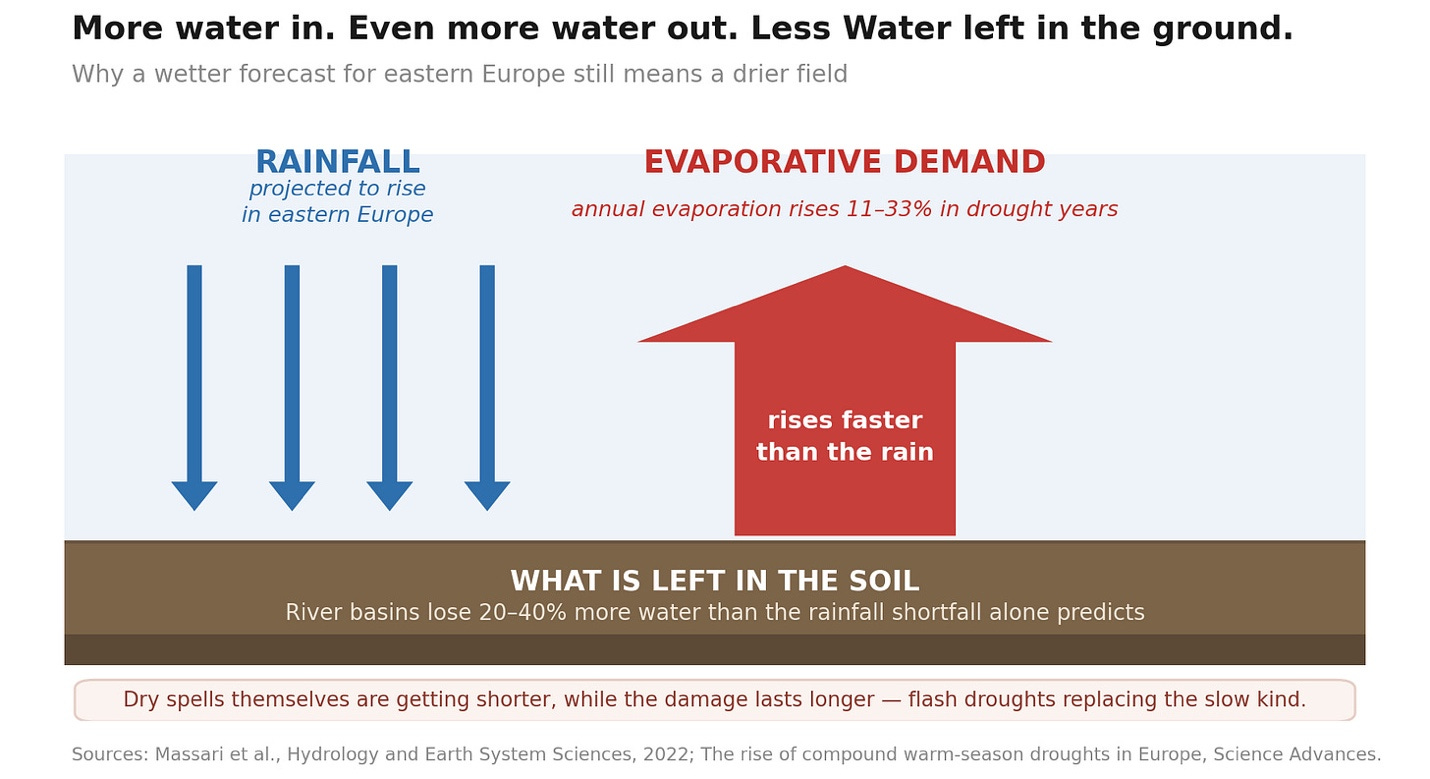
Figure 4. The water budget behind the paradox. Rain is only the income side of the ledger. When a warmer atmosphere raises the withdrawal faster than the deposit grows, the balance in the soil falls even in a wetter year. ¹² ¹³
“Climate change creates warmer air and increased evaporative demand, pulling water out of soil and plants faster than the expected additional rainfall can replace that water, so the ground dries out even as the skies and atmosphere get wetter. More rain, more drought.”
The reason that matters is a question of buffers. More rain sounds like reprieve, and where there is irrigation, it partly is. But eastern European farming is overwhelmingly rainfed. No canals, no allocations, no reservoirs sit between the atmosphere’s demand and the crop, so when evaporative demand outruns the rain, it comes straight out of the soil this year’s crop is rooted in. The same physics operates across the American West, this is not a European affliction, but there it meets infrastructure first, reservoirs, aquifers, rivers that have been dived for decades. As a result, a soil-moisture problem becomes a water-rights problem, which buys years of argument and some genuine protection. Eastern Europe has no such intermediary. The statistic arrives as a diminished harvest; in the same season the drought is measured.
This is not one study’s quirk. Research across Europe has found that the meteorological droughts themselves are getting shorter, while high evaporative demand stretches the total damage out longer, so that warm-season droughts and “flash droughts” are steadily replacing other kinds of drought. ¹² European river basins now lose 20 to 40 percent more water than their rainfall shortfalls alone would predict, because so much more water evaporates on the way into and down the rivers. ¹³
On the good side, long-term well records across Portugal, Spain, France and Italy show that water levels in wells are broadly stable, with one in five rising, showing better management has helped several semi-arid regions recover. ¹⁴ Europe’s groundwater is not uniformly collapsing. Europe’s soils and growing seasons are where the damage from increased evaporation is concentrated, and where crops are being decimated. Where people have managed water deliberately, the water has responded. That is worth holding onto and expanding.
In America, the drought will not end so much as relocate. That is a statement about geography, not about severity. Roughly two fifths of the country was in drought this August, and Lake Mead fell to a record low on the sixth of August 2026. ¹⁵ The same thirsty atmosphere is at work in America as in Europe; what moves is where this evaporative demand lands. The El Niño now building is forecast to push storms into the southern and southwestern United States and starve the northern tier, with below-normal precipitation and increased evaporative demand over the Northwest and north-central states set against a wetter southern tier. ¹⁶ For the Southern Plains, after eight years of drought, that is real relief.
But look at where the dryness is being sent. In Idaho, Oregon and Washington, a warmer El Niño winter means less precipitation overall and more of it falling as rain instead of snow, which means less snowpack, less summer runoff, and higher drought and wildfire risk the following summer. ¹⁷ Snowpack is a buffer of exactly the kind eastern Europe has never had: a reservoir that fills in winter and lets go slowly through the dry months. A warm winter does not drain it. It stops the snowpack from forming. That is a 2027 drought being manufactured this winter, aimed at the spring wheat country and the Pacific Northwest grain export belt, which are already among the driest parts of the country. Federal drought scientists caution that one wet winter will not refill the Southwest’s depleted reservoirs and aquifers regardless of how wet the El Niño makes it. ¹⁸
So, the honest summary is not that these droughts end in 2027. It is that the atmosphere gets thirstier on both continents and droughts continue, and what differs is only what stands in the way. Europe’s fields have nothing. America has snowpack and reservoirs, and this winter is forecast to take some of both, moving the shortfall north onto different farmers. Neither continent can expect a drought-free year 2027.
2. The El Niño in the Pacific Ocean That Is Still Coming
The second pressure has not arrived yet, and it is the largest.
A very strong El Niño is now forecast for this winter, with better than nine-in-ten odds, and a real chance of being the strongest event measured since records began in 1950. ¹⁹ El Niño is not a storm. It is a large-scale rearrangement of where rain falls on Earth, and it moves rain away from croplands in southern Africa, Southeast Asia and Central America, in a pattern that has repeated for a century and a half.
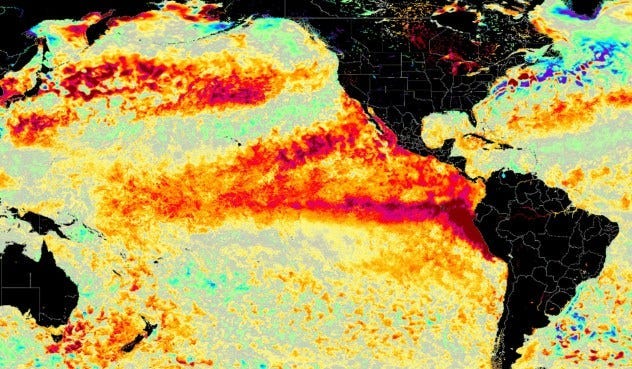
Figure 5. Pacific sea-surface temperature anomalies. NASA Worldview.
It deserves saying that this rearrangement is not all bad news. El Niño may actually help some of the places currently in drought. Forecasts suggest Western and Southern Europe turn wetter this autumn, and that the American Southwest and Southern Plains get an unusually wet winter. After years of drought in both regions, that would be a genuine mercy, and some farmers will end up owing this El Niño a debt.
But three things are true at the same time. Rain in October does not restore a crop harvested in September. The relief is forecast for the wrong regions on the wrong schedule: wetter in the Mediterranean, drier over exactly the northern European grain belt now deciding what to plant. Heavy rain arriving on hillsides burned bare this summer produces floods, not recovery.
The relief is real, regional, and late. It arrives for some farmers after the crop it might have saved is already in the trash, and it arrives in the same season the tropics, which already have had too little rain to grow their crops, have to plant their single corn crop of the year. The bottom line is that the 2026-7 El Niño is going to be severe and cause crop losses where there are the smallest buffers to prevent hunger and even starvation. We know where this is going to happen, where crops are going to fail, where people will be hungry.
3. The Fertilizer Squeeze
The third pressure is quieter and slower. Fertilizer costs spiked earlier this year after the closure of the Strait of Hormuz. Nitrogen prices have since fallen back substantially, and that part of the crisis has genuinely eased. ²⁰
However, the phosphate shortage which was also caused by the closure of the Strait of Hormuz hasn’t eased. The closure lifted the price of both nitrogen and phosphate fertilizers, but only the price of nitrogen (urea fertilizer) has come back down, because the two fertilizers are produced differently.
Nitrogen is manufactured: urea is made from natural gas, so when the energy shock passed the price of urea followed it down, and new capacity to manufacture urea can be built anywhere the gas is cheap.
However, phosphate is mined, in only a handful of countries that hold most of the world’s phosphate-rich rock, and two of them have stopped selling phosphate. China, the largest exporter, suspended phosphate exports in December to protect its own spring planting and has extended that suspension at least through August; traders do not expect phosphate shipments from China to resume quickly. Russia, another of the five countries that dominate the trade, has capped total fertilizer exports at 20 million tonnes from June to November, including some 7 million tonnes of the compound fertilizers that carry phosphate. Between them they have taken a large share of globally traded phosphate supply off the market, and there is nobody positioned to replace this shortage. Morocco and Saudi Arabia are already running flat out, and no significant new capacity is expected before 2027. ²¹
Then there is the acid. Turning rock into phosphate fertilizer takes sulfuric acid, and sulfur is not mined to order. It is stripped out of crude oil and sour gas during processing. This means how much of sulfur exists depends on how much oil and natural gas the world is refining, and where. The Gulf is traditionally one of the largest sources of sulfur production, which is why the same war that closed the Strait of Hormuz also tightened the world supply of sulfur, since these countries have not been processing typical amounts of oil and sour gas since exports are restricted. China also has restricted exports of sulfuric acid alongside the restriction on the export of phosphate fertilizer itself.
Ammonia and urea supplies on the global market have rebounded since the spring, as shipping fears receded and China loosened a separate restriction on the export of urea. The global sulfur supply has not similarly rebounded. The price of sulfur went from $155 a tonne to $400 a tonne between late February and early May 2025. A plant with its own phosphate rich rock and its own manufacturing facility still cannot make phosphate fertilizer without sulfuric acid. That is not hypothetical. In May, the company Mosaic which mines most of America’s phosphate rock and makes most of its phosphate fertilizer, halved output at its plants in Bartow, Florida and Faustina, Louisiana and scaled back further production in Brazil, explicitly to avoid buying sulfur at the high prices being asked due to the closure of the Strait of Hormuz. By July it was reducing two more American plants as its sulfur inventories fell and prices remained high. The largest phosphate producer in America is switching capacity off in the middle of a phosphate fertilizer shortage, because the sulfuric acid needed to produce it is too expensive for Mosaic to make any profit on the production of phosphate fertilizer. Washington has acknowledged the squeeze in the plainest terms available to it. On 29 June, 2026, the President signed a proclamation declaring an emergency over threats to the availability of phosphate fertilizer, and suspended anti-dumping and countervailing duties on Moroccan phosphate for up to eight months, citing conflicts in fertilizer-producing regions and trade actions by major producing countries. ²¹
So, the price of phosphate fertilizer stays high, and farmers around the world put less of it on their fields. ²¹ Crops feed on the reserve of phosphate built up in the soil over past seasons, not on what was spread this spring. As a result, a farmer who skips an application of phosphate fertilizer this year because of the high prices sees no penalty at this year’s harvest, because the crop draws down its nutrient savings from the soil instead. The penalty for not applying phosphate because it is too expensive this year arrives in the reduced crop production in the next two to four years. The reduced productivity of the fields arrives first for the farmers whose small crops and limited resources forced them to skip applying phosphate in the first place. ²¹ The failure to be able to afford applying phosphate causes hunger for years to come after the phosphate fertilizer is not applied to fields.
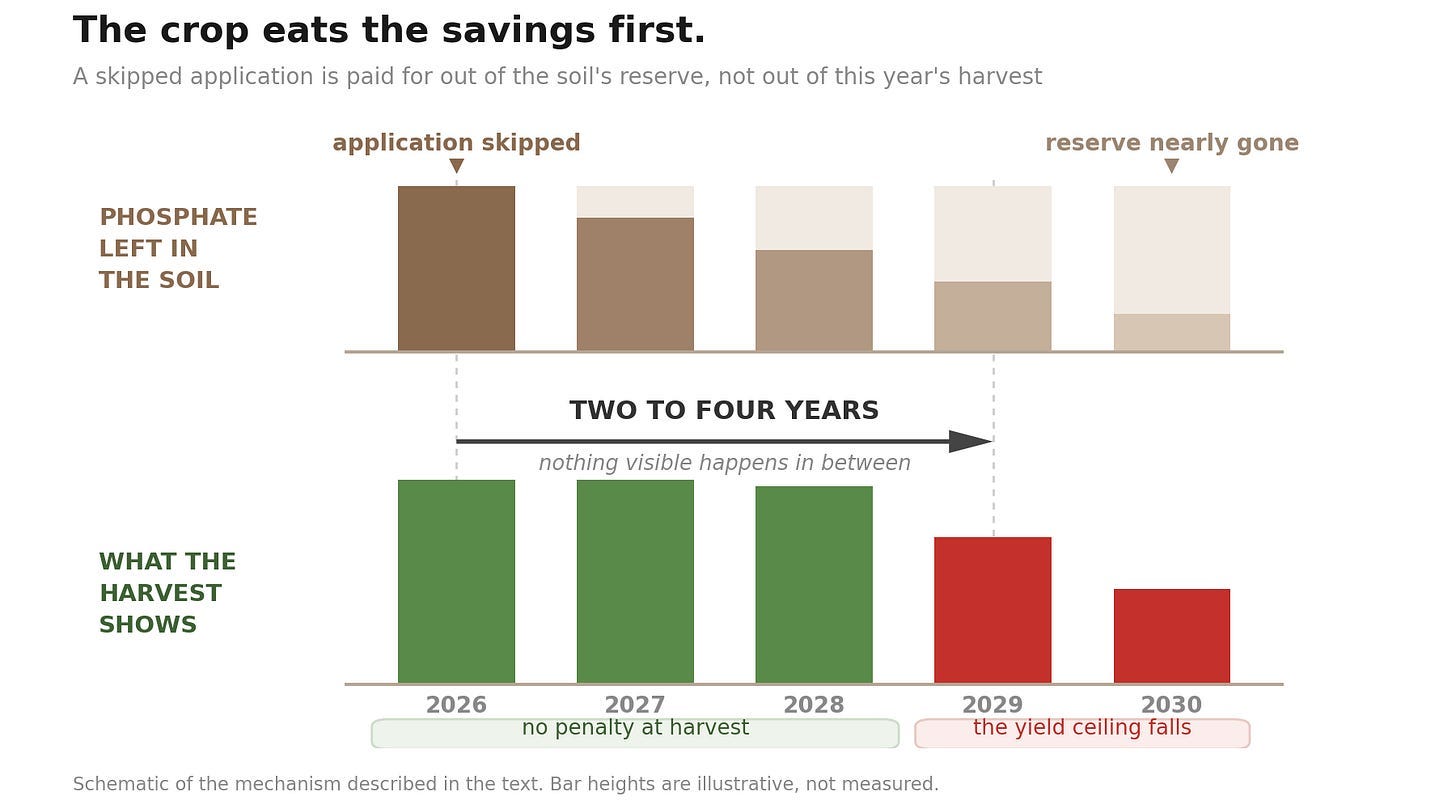
Figure 6. Why the phosphate bill arrives late. The crop draws on a reserve accumulated over past seasons, so the harvest immediately after a skipped application looks normal. The reserve, not the yield, absorbs the loss first. ²¹
Three pressures, then: a drought whose cause is strengthening as climate change becomes more severe, a Pacific Ocean pattern that peaks this winter, and a nutrient input squeeze that plays out slowly over years. Now is the time to take preventative action and for you to reach out to your federal and state lawmakers and push them to prevent a lean rain year from turning into a humanitarian disaster.
Only public pressure and the fact that where Trump has shut down climate data scientists have stepped in to keep recording the data and where Trump ended the Hunger Report Feeding America, the Greater Boston Food Band, Project Bread and hunger organizations in all 50 states have kept reporting the data. So I guess the answer is good people like you and me!
You can hear the future talking. “They continued to make wars instead of creating salvation for humanity? Nooooo. They couldn’t have been that stupid.”