

From Breadbasket to Breaking Point: America’s Farmers in Crisis
The United States feeds the world. Its vast plains of corn and wheat, its orchards of California almonds and Georgia peaches, its Gulf Coast shrimping fleets and Midwestern cattle ranches have long underpinned global food systems. Yet in 2025, something has shifted, not quietly, but in wildfires, floods, record heat domes, and billion-dollar disaster declarations. American farmers are fighting a war against the weather, and they are losing.
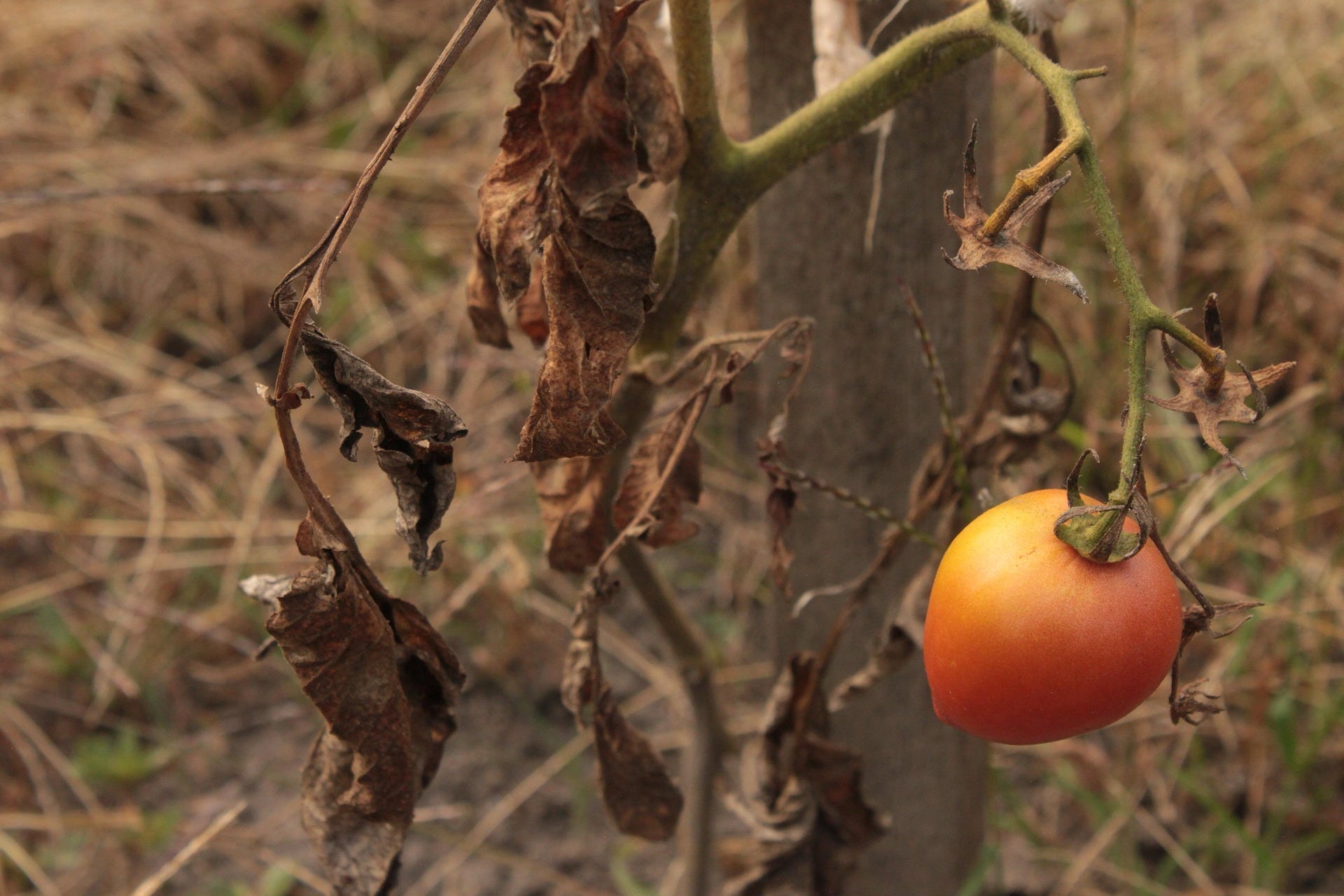
Photo credit: 3centista
The USDA’s 2025 Farm Income Forecast tells the story in numbers. Net farm income fell by $30 billion from its 2022 peak, driven in large part by climate-related production losses, rising input costs amplified by weather-damaged supply chains, and the compounding unpredictability of growing seasons warped by a warming atmosphere.[1] The American Farm Bureau Federation reported in early 2025 that nearly one in four farm operations had experienced a “significant weather-related loss” in the prior 12 months - the highest rate of loss in the survey’s 30-year history.[2]
These are not abstract statistics. They are the debt ledgers of wheat farmers in Kansas watching their fields crack open in drought; the ruined tomato rows of Florida growers hit by back-to-back storms; the apple orchards of Washington State that lost entire harvests to a spring freeze following an unusually warm February, the kind of sequence that climate scientists call a “false spring,” which is now occurring with far greater frequency as temperatures climb erratically.[3] For the 3.4 million farm operators who work the land across the United States, the climate crisis is not a future risk to be modelled. It is last year’s loss, this year’s loan, and next year’s gamble.[4]
“American farmers are absorbing climate shocks that were caused overwhelmingly by the emissions from the burning of fossil fuels by industry and the wealthy - while Washington isn’t even discussing whether the climate crisis is real.”
The Geography of Loss
Climate change does not hit American agriculture uniformly, rather it hits according to a geography of existing vulnerability, rewriting which regions can grow what, and for how long. In 2025, four overlapping crises define the landscape.
The Southern Plains and Southwest are in the grip of accelerating aridification. Texas, Oklahoma, and New Mexico recorded their lowest winter wheat yields in a decade in the 2024 - 25 season, following a stretch of below-average precipitation and above-average temperatures that have stretched across 18 consecutive months. The USDA’s drought monitor classified more than 60% of the Southern Plains as in “severe” or “extreme” drought at the start of the 2025 planting season.[5] Cattle ranchers across the region are being squeezed by the avian flu-driven rise in feed costs and the failure of pasture grasses are now being forced to early herd liquidations that echo the crisis years of 2011–12. The USDA estimates the US cattle herd fell to its lowest level since 1951 in early 2025.[6]
California’s agricultural heartland is caught between flood and drought in an increasingly violent oscillation. The “atmospheric rivers” that battered the state in January 2023 were followed by drought conditions by spring 2024, only to be succeeded by a series of damaging late-season heat events in summer 2025 that devastated the state’s world-leading almond, pistachio, and tomato crops. California grows more than a third of the nation’s vegetables and nearly three-quarters of its fruits and nuts which makes its climate instability a national food security issue, not simply a regional one.[7]
The Midwest and Great Plains corn belt is experiencing shorter effective growing windows as spring arrives earlier, triggering early planting that is then exposed to late-season frost and summer heat events that intensify at exactly the stage when corn and soybean crops are most vulnerable to heat stress. A 2025 study in Nature Food found that extreme heat days, when temperatures exceeding 35°C (95°F), have increased by an average of 11 days per growing season across the Corn Belt since 2000, with a measurable and statistically significant reduction in crop yields as a result.[8]
The Gulf Coast and Southeast are contending with a lengthening hurricane season, saltwater intrusion into coastal farmland from sea level rise, and unprecedented flooding events. In 2024, Hurricane Helene, one of the most damaging storms in Appalachian history, devastated farms across western North Carolina and Tennessee, wiping out apple orchards, vegetable operations, and livestock facilities that had no flood insurance because they sat above the historical flood plain.[9] FEMA and USDA disaster declarations covered only a fraction of losses. The farmers who rebuilt are now facing the same exposure again.
Climateflation Comes Home: Food Prices, Hunger, and the American Table
Food insecurity does not begin at the farm gate. It ends at the kitchen table, or more precisely, at the moment a family opens the refrigerator and finds it emptier than it should be. In the United States in 2025, that moment is arriving with increasing frequency, and climate change is one of its architects.
The USDA’s Economic Research Service reported in late 2024 that 47.4 million Americans lived in food-insecure households in 2023 (the most recent year of full survey data) representing 13.5% of the population and a sharp increase from the decade-low of 10.2% recorded in 2021.[10] Preliminary data from Feeding America’s nationwide network of food banks suggests the figure has continued to climb in 2024 and 2025, with demand at food pantries reaching record highs in major cities including Houston, Phoenix, Atlanta, and Chicago.[11]
The mechanism linking climate change to domestic hunger runs through prices. The same heat extremes, droughts, and storms that are destroying American harvests are also generating what researchers call “climaflation,” that is food price inflation with climate disruption as its engine. This is not a theoretical future risk. It is the bill American consumers are already paying.
Egg prices are the most visible case study. The avian influenza outbreak was a zoonotic disease that spreads more readily under the warmer, wetter conditions associated with climate change. The outbreak killed more than 120 million laying hens in the United States between 2022 and early 2025, producing the most severe egg supply shock in American history. Retail egg prices peaked at more than $9 per dozen in January 2025 that is more than triple the pre-outbreak average. The largest US egg producer, Cal-Maine Foods, took advantage of the disaster and reported net income of $509 million in a single quarter, more than triple its prior-year results. At the same time. food bank directors reported that families were asking specifically for eggs, once a staple of low-income diets, that had become unaffordable due to the outbreak.[12]
Produce prices followed a similar pattern. California vegetable shortfalls pushed retail lettuce prices up 34% year-on-year by mid-2025; Florida tomato losses from storm damage drove tomato prices to their highest real-terms level in two decades.[13] Beef prices that were already high due to the smallest US cattle herd in 74 years, reached record highs at the supermarket counter, with 80% lean ground beef averaging over $8 per pound in major markets.[14] The USDA’s food price inflation tracker recorded overall grocery inflation of 6.8% for the 12 months to June 2025, with the categories most affected by climate events: eggs, fresh produce, and meat running significantly higher than this average.[15]
“In the United States, the lowest income quintile already spends nearly a third of its budget on food. Every percentage point of food price inflation is a meal skipped, a bill unpaid, a child going to school hungry.”
Who Bears the Weight
Food price inflation is not felt equally. A family in the top income quintile spending 5% of its budget on food barely notices a 7% price rise. A family in the bottom quintile spending 30% of its budget on food notices it at every meal.
The populations most exposed to climate-driven food insecurity in the United States are also those with the least capacity to absorb it. Black, Latino and Indigenous households experience food insecurity at rates of 22%, 20% and >25% respectively, more than double the white household rate of 9%.[16] Rural communities in the Southern Plains, Appalachia, and the Mississippi Delta, regions most directly affected by climate-driven agricultural losses, have the highest rates of food insecurity and the weakest food retail infrastructure. Native American reservations, many of which sit in regions of extreme drought, record food insecurity rates that exceed 25% in some communities.[17]
The farmers who supply the food system are themselves food insecure at striking rates. A 2024 survey by the National Young Farmers Coalition found that 36% of beginning farmers reported food insecurity in the prior year, a figure that rose to 48% among farmers of color.[18] These are the people growing America’s food, navigating a climate that is becoming hostile to agriculture, carrying debt loads from equipment and land costs that climate losses make increasingly difficult to service. The family farm which is a romantic fixture of American national identity is disappearing: the number of farms in the United States has fallen by more than 100,000 since 2017, with the losses concentrated in small and mid-sized operations that cannot absorb the scale of climate-driven losses that larger agribusinesses can.[19]
Who Profits When American Harvests Fail
As with the global food system, the domestic crisis has created winners as well as losers and the winners are not the farmers or the families going hungry.
The four corporations that dominate global grain trading, Archer-Daniels-Midland (ADM), Bunge, Cargill, and Louis Dreyfus. All of these companies reported exaggerated profits in 2024 and 2025, as climate-driven supply volatility created profitable arbitrage opportunities. Cargill reported revenues of over $177 billion in fiscal year 2025, even as the farm-level incomes of the growers it purchases from declined.[20] The crop insurance industry that is heavily subsidized by the federal government, with premiums paid by taxpayers and profits privatized by insurance companies collected record premium volumes as climate risk drove mandatory coverage uptake, while simultaneously lobbying against the USDA reforms that would have reduced payments to the largest farm operations.[21]
The federal crop insurance program spent a record $17.3 billion in 2024, more than double its 2010 level in inflation-adjusted terms, with the majority of those payments flowing to large commercial operations, not the small and beginning farmers who are most financially exposed to climate losses.[22] This is a structural transfer: public money absorbs the climate risk of industrial agriculture while the profits of those same operations remain private.
What Must Change: From Crisis Management to Climate Justice
The intertwining of climate change, farm income collapse, and food insecurity is not a natural disaster. It is a political choice, the accumulated result of decades of under-investment in climate adaptation, agricultural policy that has favored large industrial operations over smallholders, and a food safety net whose design predates the era of climate-driven food inflation.
The Farm Bill is the omnibus legislation that governs US agricultural and nutrition policy and is renewed every five years. The Farm Bill was held up in Congress and is still awaiting reauthorization after a fractious political process that pitted commodity crop subsidies against nutrition program and Supplemental Nutrition Assistance Program (SNAP) funding. Advocates for food-insecure families warned that proposed cuts to the SNAP program will remove a critical buffer precisely as climate inflation was making food less affordable for low-income households. The Center on Budget and Policy Priorities estimated that proposed SNAP cuts would eliminate benefits for up to 8 million people.[23]
What is required is not tinkering at the margins. The climate and hunger crises demand policy proportionate to its scale. The federal government must redirect agricultural subsidies from the largest commodity operations toward the small and mid-sized farms that grow diversified food for domestic consumption and that are most in need of climate adaptation support. It must expand and protect nutrition support programs as a direct response to climate-driven food price inflation. It must invest in agroecological research and farmer-led adaptation such as cover cropping, soil health, water efficiency, all techniques that reduces vulnerability to weather extremes rather than merely insuring against them after the fact.[24]
And it must be honest about cause and consequence. The United States, with less than 5% of the world’s population, has contributed roughly 25% of cumulative global CO₂ emissions since industrialization.[25] The farmers of Kansas and the families lining up at Houston food banks did not cause the climate crisis in proportion to their suffering from it. The corporations and billionaires whose emissions and political influence have delayed climate action for decades bear a debt to the food system. They have helped to destabilize the food system and now windfall profit taxes, emissions accountability, and genuine investment in resilient food systems must be implemented begin to rebuild the American food system and safety net.
“The family farm is disappearing. The food pantry queue is growing. Both are consequences of the same failure: a political system that has allowed the costs of the climate crisis to be borne by those who caused it least.”
The United States has long told itself a story about its agricultural abundance, a story of inexhaustible plains, technological mastery, and the family farmer as the backbone of the republic. That story is being rewritten, season by failing season, by a climate that does not respect national mythology. The question is whether American politics can tell a different story, one of justice, adaptation, and a food system rebuilt to last before the old one ends entirely.
Endnotes
1. USDA Economic Research Service (2025). Farm Income and Wealth Statistics: Net Farm Income Forecasts. Washington DC.
2. American Farm Bureau Federation (2025). Annual Climate and Weather Impact Survey. AFBF Research Division.
3. Ault, T.R. et al. (2025). False spring frequency and agricultural frost exposure under continued warming. Nature Climate Change.
4. USDA National Agricultural Statistics Service (2024). 2022 Census of Agriculture. Washington DC.
5. USDA Drought Monitor (2025). Drought conditions across the continental United States, April 2025. University of Nebraska–Lincoln.
6. USDA NASS (2025). Cattle: January 2025 Inventory. USDA National Agricultural Statistics Service.
7. California Department of Food and Agriculture (2024). California Agricultural Statistics Review 2023–24. Sacramento.
8. Schlenker, W. & Lobell, D.B. (2025). Extreme heat days in the US Corn Belt and yield consequences: 2000–2024 trends. Nature Food.
9. USDA Farm Service Agency (2025). Hurricane Helene Agricultural Loss Assessment: Appalachian Region. Washington DC.
10. USDA Economic Research Service (2024). Food Security in the United States: Key Statistics and Graphics. Using data from the December 2023 Current Population Survey Food Security Supplement.
11. Feeding America (2025). The State of Senior Hunger in America 2025. Feeding America Research Team.
12. Washington Post (2025, April 8). Egg prices, profit increase at Cal-Maine as avian flu reshapes supply.
13. USDA Agricultural Marketing Service (2025). National Retail Report: Fresh Fruit and Vegetables, June 2025.
14. USDA Economic Research Service (2025). Beef and Cattle Outlook, May 2025. Washington DC.
15. USDA Economic Research Service (2025). Food Price Outlook, 2025. Washington DC.
16. USDA ERS (2024). Food Security in the United States: Definitions of Hunger and Food Security. Tabulations by race/ethnicity.
17. Jernigan, V.B.B. et al. (2024). Food insecurity in Native American communities: Intersection of climate risk and structural inequality. American Journal of Public Health, 114(3).
18. National Young Farmers Coalition (2024). Building a Future with Farmers: 2024 Survey Report. Hudson, NY.
19. USDA National Agricultural Statistics Service (2024). 2022 Census of Agriculture: Highlights on Farm Numbers. Washington DC.
20. Cargill Inc. (2025). Fiscal Year 2025 Annual Report. Minneapolis, MN.
21. Environmental Working Group (2025). Crop Insurance: Who Benefits? Federal Subsidy Flows and Industry Lobbying. EWG Report.
22. USDA Risk Management Agency (2025). Summary of Business: 2024 Crop Year. Washington DC.
23. Center on Budget and Policy Priorities (2025). Proposed SNAP Cuts Would Harm Millions of People Facing Hardship. CBPP Analysis.
24. Food Policy Action (2025). Building a Climate-Resilient Farm Bill: Policy Recommendations for the 119th Congress.
25. Hickel, J. (2020). Quantifying national responsibility for climate breakdown. The Lancet Planetary Health, 4, e399–e404.