

From Field to Famine: How Climate Change Is Dismantling the Global Food System
Hunger is rising. After decades of slow but steady progress, the number of people facing food insecurity has surged. According to the Food and Agriculture Organization of the United Nations (FAO), 2.3 billion people faced moderate or severe food insecurity in 2024. More and more people are facing a hunger crisis particularly since 1/3 of the world’s fertilizer is being held up due to the war in Iran and crops are being planted now which need that fertilizer.[1] The drivers are multiple, but one has become impossible to ignore: climate change is systematically undermining the world’s ability to grow, distribute, and afford food.
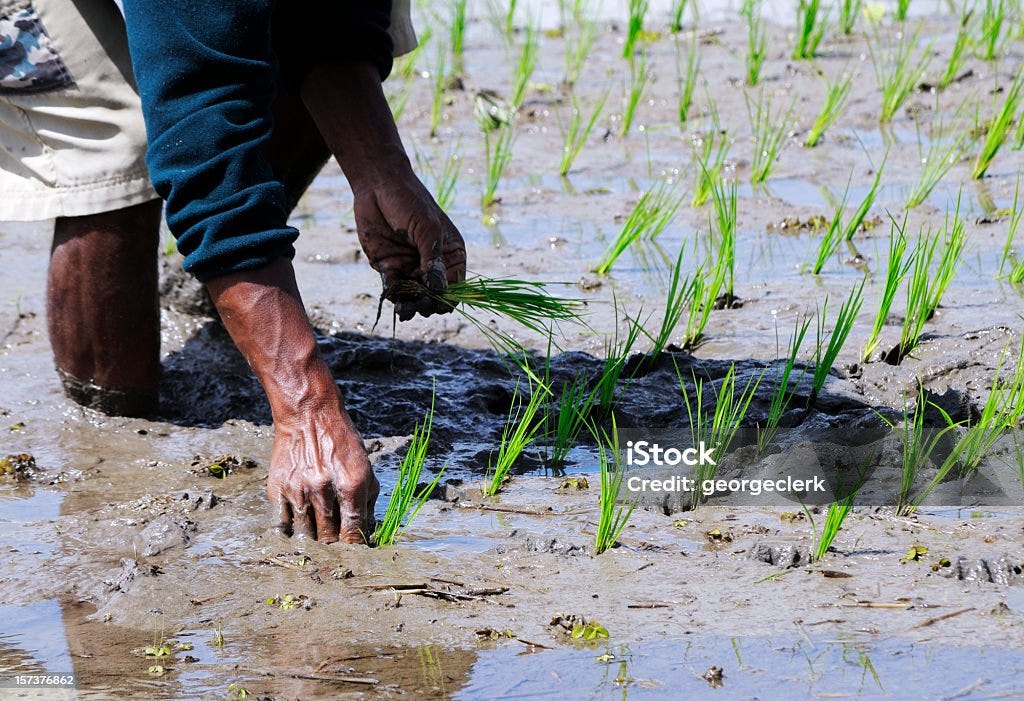
The Intergovernmental Panel on Climate Change (IPCC) Sixth Assessment Report (2022) identifies food security as one of the most critical and immediate risks of a warming planet. It finds that climate change has already reduced global agricultural productivity growth by roughly 21% since 1961, with the losses concentrated in low- and middle-income tropical countries — precisely where food insecurity is already highest.[2] For staple crops, the trajectory is alarming: maize yields are projected to fall by up to 24% under high-emissions scenarios; wheat and rice face comparable losses. For every 1°C rise in global average temperatures, food production declines by the caloric equivalent of forcing one person in every household on earth to skip a meal every week.[3]
These are not distant projections. They are unfolding now. The prolonged drought that gripped the Horn of Africa from 2021 to 2023 — described by meteorologists as the worst in 40 years and made significantly more likely by human-caused climate change[4] — pushed 22 million people across Ethiopia, Kenya, and Somalia into acute food insecurity.[5] In the Central American Dry Corridor, multi-year droughts have destroyed consecutive harvests, driving malnutrition, stunting, and mass displacement. In 2024, extreme heat and El Niño conditions devastated West African cocoa harvests and Vietnam’s coffee crop, sending global commodity prices surging — with none of the gains flowing to the farmers who grew them.
“For every 1°C rise in temperature, a poor smallholder farmer loses more than half their income. For a billionaire investor, the same degree of warming represents a new profit opportunity.”
The Crop Collapse: Science on the Front Line
The relationship between warming temperatures and crop failure is now one of the most robustly documented findings in climate science. A landmark 2025 study published in Nature modelling global production across all major crops confirmed that current trajectories will produce significant and widespread yield declines across cropping regions by mid-century, with the greatest impacts concentrated in sub-Saharan Africa, South Asia, and Central America.[6]
Pastoralism — the livelihood of more than 75% of the global population in the world’s dryland regions — is equally exposed. The IPCC Special Report on Climate Change and Land (2019) documents falling pasture productivity, damage to animal reproductive function, and accelerating biodiversity loss as rainfall patterns shift and temperatures rise.[7] For the estimated 200 million pastoralists worldwide, these are not abstract risks — they are the destruction of livelihoods that have no equivalent substitute.
The majority of cropping regions have now experienced both rapid warming and atmospheric drying, affecting an area home to one fifth of the global population.[8] Yield progress for barley, wheat, and maize — the crops on which global food security most depends — has slowed significantly as a direct result of climate stress. The world is running a food security deficit even before accounting for the full consequences of future warming.
Smallholder Farmers: The People Who Feed the World Are Going Hungry
Smallholder farmers produce over a third of the world’s food, and approximately 2.5 billion people — including the vast majority of the world’s most food-insecure populations — depend on small-scale farming, herding, and fishing for their survival.[9] These are the people most exposed to climate change and least equipped to adapt to it.
The economic consequences are stark. A study from Kansas found that for every 1°C of warming, net farm income fell by 66%.[10] Research from India documents a 17–21% decrease in farm revenue per degree of warming.[11] A broader analysis finds that a 1°C increase in average temperatures is associated with a 53% decrease in the farm incomes of poor rural households globally. These losses are not recovered in good years — they accumulate, compounding across seasons, pushing households into debt, into hunger, and ultimately into migration.
Women farmers, who make up 43% of the global agricultural labour force, bear a disproportionate share of this burden.[12] A study in France found women are overrepresented in the crops most vulnerable to climate variability, yet more likely than men to adopt sustainable practices — managing a third of organic farms while comprising less than a third of permanent agricultural workers.[13] In Bangladesh, climate disasters directly destroy the small livestock, homestead gardens, and informal trading that women rely on for income and nutrition, with limited access to land, credit, or social protection making recovery extremely difficult.[14]
Climateflation: How a Warming World Is Making Food Unaffordable
Even where food remains available, it is becoming unaffordable. A phenomenon researchers have begun calling ‘climateflation’ — food price inflation driven by climate-related supply disruptions — is now a documented and measurable economic force. A 2024 study published in Nature Climate Change found that global temperature increases projected for 2035 will add between 0.92 and 3.23 percentage points to annual food price inflation.[15] Food prices in Europe are forecast to rise by up to 50% due to global warming over coming decades.[16]
These headline figures translate differently across the income spectrum. In Nigeria, a person allocates nearly 60% of their household budget to food; in the United States, the figure is less than 7%. When food prices rise, the poorest households have nowhere to absorb the shock — they eat less, they eat worse, they pull children from school, they take on debt.[17] In the United States itself, the lowest income group already spends a third of its budget on food; climate-driven price rises will hit them hardest even in the world’s wealthiest economy.
A team of experts convened by the European Climate Research Institute (ERL) in 2025 investigated climate-linked food price spikes across 18 countries between 2022 and 2024, documenting how heat, drought, and extreme precipitation events each generated measurable and sustained price increases for staple commodities.[18] In every case studied, the price increases persisted long after the climate event had passed: between September and October 2023, the FAO’s global food price index fell by 11.5%, yet domestic food prices across low- and lower-middle-income countries continued to rise, with the poorest country group recording price increases of 30%.[19]
Who Profits When Food Systems Fail
The costs of climate-driven food crises are not distributed evenly across the supply chain. While smallholder farmers lose incomes and low-income consumers skip meals, the corporations that dominate the global food system have used climate-related supply disruptions as cover for extraordinary profit-taking.
The four corporations — Archer-Daniels-Midland, Bunge, Cargill, and Louis Dreyfus — that together control an estimated 70–90% of global grain trade saw their profits surge following Russia’s invasion of Ukraine and the associated global food price spike. Cargill’s profits rose by 23% in 2022 compared to 2021; ADM recorded its highest profits in its history.[20] Ten hedge funds made an estimated $1.9 billion in profits ahead of the food price spike, through speculative positions on food commodities.[21]
Climate shocks have become a mechanism for further concentration of profit at the top of food supply chains. In 2024, extreme weather and El Niño conditions destroyed West African cocoa harvests, sending prices up 231% year on year — with none of that increase reaching the cocoa farmers who had lost their crops.[22]Drought in Brazil and Vietnam drove coffee prices up 55% by August 2024, while the trading companies that serve as middlemen in the supply chain captured the margin.[23] The avian influenza outbreak — a climate-sensitive zoonotic risk — killed over 120 million hens, tripling retail egg prices in the US, while major producer Cal-Maine reported $509 million in a single quarter: more than triple its previous year’s results.[24]
Cargill — one of the world’s largest food traders — now counts 12 family members as billionaires, up from eight before the pandemic.[25] The food industry’s billionaires are enriching themselves from the same climate crisis that is starving the farmers who grow their commodities and pricing out the consumers who buy their products.
“Climate change is not just destroying harvests — it is restructuring who controls the food system and who goes hungry as a result.”
The Politics of Hunger: Inequality, Power, and the Failure to Act
The link between climate change and hunger is not a natural disaster — it is a political one. The countries that are most food-insecure today contributed least to the emissions that are destroying their agricultural systems. The people going hungry in the Dry Corridor of Central America, in the dryland communities of the Sahel, and on the flood-prone deltas of Bangladesh did not cause the climate crisis. The people who did — the billionaire investors in fossil fuel companies, the executives who lobbied against climate regulation, the owners of the private jets — are insulated from its food consequences by their wealth.
Between 1850 and 2015, the countries of the Global North, representing just 14% of the world’s population, were responsible for 92% of carbon dioxide emissions in excess of the safe planetary boundary.[26] Analysis combining the Stockholm Environment Institute’s emissions inequality data with climate attribution science finds that the richest 1% of humanity contributed 26 times more to extreme weather events than the average person — including the droughts, floods, and heat extremes that are now driving food system collapse.[27]
The Corporate Capture of Agricultural Systems
The food crisis is not simply a story of weather — it is also a story of market power. A small number of agro-industrial corporations have come to control critical nodes of the global food system. Four firms — Syngenta Group, Bayer, BASF, and Corteva — now control half the world’s commercial seed supply and more than half the global pesticides market.[28] These same corporations are marketing climate-related crop failures as an opportunity to sell ‘climate-smart’ technologies — new seeds, new inputs, new contracts — that deepen farmer dependency on corporate supply chains rather than building genuine resilience.
Large-scale agribusinesses in the US and EU receive billions in public subsidies that allow them to sell imported staple crops — wheat, rice, corn, soy — at prices below what local farmers can compete with.[29] This structural unfairness is compounded by climate vulnerability: smallholder farmers in the Global South face the double burden of competing with subsidised industrial agriculture and absorbing the climate shocks that industrial agriculture’s emissions have caused.
Roughly 21–37% of global greenhouse gas emissions originate from the food system itself, from farming and land use to storage, transport, processing, retail, and consumption.[30] The industrial model that dominates global food production is both a major driver of the climate crisis and the primary beneficiary of the instability that crisis creates. This is not a market failure — it is the market functioning exactly as designed, concentrating gain at the top while socialising cost and risk onto those at the bottom.
What Must Change: From Crisis to Justice
The evidence demands a response proportionate to the scale of the crisis. Techno-managerial fixes — new seed varieties, precision agriculture, carbon markets — are not sufficient, and in many cases actively entrench the corporate power structures that are making the crisis worse. The path from climate-driven hunger to food security runs through structural change: in land rights, in trade rules, in corporate accountability, and in who controls the food system.
Governments must move away from industrial monoculture agriculture and invest in climate-resilient smallholder food systems. This means protecting farmers’ access to arable land, community seed banks, and agricultural inputs; funding agroecological research and practice; and reforming trade rules that allow rich-country subsidy regimes to undercut farmers in climate-vulnerable nations.[31]
Women’s role in transforming food systems must be recognised and resourced. Policy biases and structural barriers that restrict women’s access to land, credit, agricultural inputs, and markets must be dismantled.[32]The rights of Indigenous Peoples, pastoralists, and smallholder farming communities to manage their lands and integrate into national adaptation plans must be protected and funded through accessible climate finance — not through the loan-based instruments that have already placed low-income nations under crippling debt burdens.
And the corporations and billionaires who have profited from the food system’s failures — and whose emissions have helped create the conditions for those failures — must be made to pay. Windfall profit taxes on food corporations that price-gouge during climate-driven supply shocks; wealth taxes on the billionaires whose investment emissions contribute disproportionately to the warming that is destroying harvests; and mandatory corporate accountability for emissions across agricultural supply chains are all tools available to governments willing to use them.
The 2025 Report of the G20 Extraordinary Committee of Independent Experts on Global Inequality concluded that all governments must set timebound, realistic targets to reduce economic inequality.[33] No target matters more urgently, or is more directly linked to food security, than closing the vast gap between those who caused the climate crisis and those who are going hungry because of it.
Endnotes
1. FAO (2024). The State of Food Security and Nutrition in the World 2024. Food and Agriculture Organization of the United Nations, Rome.
2. IPCC (2022). Climate Change 2022: Impacts, Adaptation and Vulnerability. Working Group II Contribution to the Sixth Assessment Report, Chapter 5: Food, Fibre, and Other Ecosystem Products.
3. Authors’ calculations based on global crop production modelling. Nature (2025). Crop yield projections under climate change scenarios across major staple crops.
4. World Weather Attribution (2023). Human-induced climate change increased drought severity scoring in the 2020–2023 Horn of Africa drought. WWA Collaborative Report.
5. OCHA (2023). Horn of Africa Drought: Humanitarian Situation Report. United Nations Office for the Coordination of Humanitarian Affairs.
6. Various authors (2025). Global crop production under current and projected climate trajectories. Nature.
7. IPCC (2019). Special Report on Climate Change and Land (SRCCL), Chapter 5: Food Security.
8. PNAS (2025). Rapid warming and atmospheric drying across global cropping regions. Proceedings of the National Academy of Sciences.
9. van der Lee, J. et al. (2021). Smallholder farmers and global food supply. World Development; FAO (2023). Family Farming and Food Security.
10. Environmental Defense Fund (2024). Extreme Heat and Farm Income: Evidence from Kansas.
11. Chandrasekaran, V. et al. (2024). Climate Change and Farm Revenue in India. Cogent Economics & Finance, 14(2).
12. FAO (2023). The State of Food and Agriculture: Revealing the True Cost of Food. Rome.
13. Oxfam France (2023). Genre et agriculture: les femmes en première ligne du changement climatique. Paris.
14. Oxfam (2026). Loss and Damage and Unpaid Care in Bangladesh. To be published.
15. Kotz, M. et al. (2024). Global warming and food inflation: projections to 2035. Nature Climate Change.
16. Ibid.
17. USDA Economic Research Service (2023). Food Expenditure as a Share of Household Budget by Country. Processed by Our World in Data.
18. Kotz, M. et al. (2025). Climate-driven food price shocks: case studies from 18 countries, 2022–2024. Environmental Research Letters.
19. Network Ideas (2024). Why do domestic food prices keep rising when global prices fall? Synthesis of FAO price data, 2023–2024.
20. The Guardian (2022, August 23). Record profits for grain firms as food crisis prompts calls for windfall tax.
21. Lighthouse Reports (2022). Exposed: The Hedge Funds Cashing In on the Food Price Spike. Investigative journalism report.
22. Euronews Business (2024, March 28). Cocoa prices rise to fresh records: will we run out of chocolate?
23. FAO (2024). Adverse climatic conditions drive coffee prices to highest level in years. FAO Newsroom.
24. Washington Post (2025, April 8). Egg prices, profit increase at Cal-Maine as avian flu reshapes supply.
25. Oxfam UK (2022). Food and energy billionaires pocket £453 billion windfall as cost of living crisis pushes millions into poverty. Press release.
26. Hickel, J. (2020). Quantifying national responsibility for climate breakdown. The Lancet Planetary Health, 4, e399–e404.
27. Stuart-Smith, R. et al. (2025). Attributing climate extremes to consumption emissions of the richest. Nature Climate Change.
28. ETC Group (2022). Food Barons 2022: Crisis Profiteering, Digitalization and Shifting Power. ETC Group Report.
29. Slow Food International (2024). Facts about food trade and supply that sound fake but aren’t. Slow Food Foundation for Biodiversity.
30. IPCC (2022). Climate Change and Land: Food system emissions. Special Report on Climate Change and Land, Summary for Policymakers.
31. Oxfam International (2025). Fixing Our Food: Debunking 10 Myths About the Global Food System and What Drives Hunger. Oxfam Briefing Paper.
32. UN Women / FAO (2023). Closing the Gender Gap in Agriculture: Policy Priorities for Climate-Resilient Food Systems.
33. G20 South Africa (2025). Report of the G20 Extraordinary Committee of Independent Experts on Global Inequality. IPD Columbia University.